


-
By: admin
- 0 Comments
- Blog
Starting math early is a great way to help children grow. In preschool, kids learn best by touching and playing. Abacus learning turns hard numbers into physical beads they can move with their fingers. This builds a strong base for school and helps kids feel happy and relaxed when they see numbers instead of feeling scared.
What is Abacus?
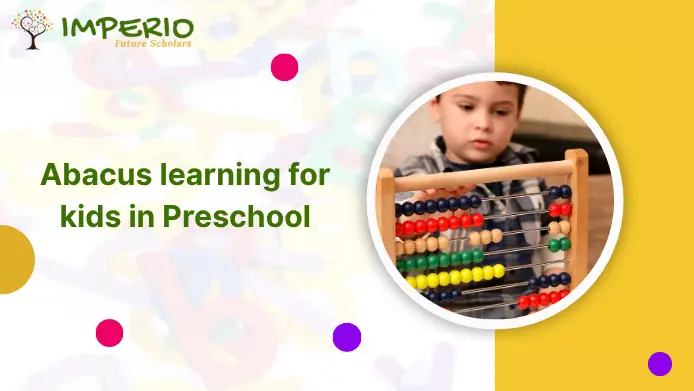
What is abacus? It is a simple tool used for mathematical calculations. It has a frame with beads that slide on wires. In abacus classes, kids learn to use it by seeing how numbers look. Instead of just writing on paper, abacus learning lets them feel the math, making it much easier to understand.
10 Key Benefits of Abacus Learning for Kids
1. Improvement in Concentration
Using the abacus involves concentration on manipulating the beads to perform calculations. It helps kids maintain their focus on one task without being affected by surrounding sounds.
2. Memory Improvement
Children learn to keep track of bead placements. This enables them to create a vivid visual memory of numbers in their minds.
3. Problem-Solving Skills
This system trains children to examine large numbers and mentally manipulate them into smaller units using the beads.
4. Speed and Accuracy
Children can complete mathematical operations efficiently after practising for a few weeks. This happens because the beads provide instant feedback on their answers.
5. Development of Mathematical Intuition
Using the abacus involves touching the beads. It allows children to visualise the physical representation of numbers such as “five” and “ten.”
6. Visualization Skills
Children can perform mental calculations using the beads with time. Therefore, they can solve complex mathematical problems using only their mind’s eye.
7. Self-Esteem
Children feel proud of their achievements when solving complex tasks using the abacus. Consequently, they develop a sense of self-worth that makes them confident.
8. Mental Arithmetic Skills
Using an abacus changes the neural connections in the brain. Hence, children develop the ability to conduct mental mathematical operations independently.
9. Makes Learning Fun and Engaging
Because it feels like a game with colorful beads, kids want to play and learn instead of feeling bored.
10. Develops hand-eye coordination
Using both hands to move beads helps the brain and hands work together. It is great for a child’s physical growth.
Difference Between Abacus Learning and Traditional Math Methods
| Aspect | Abacus Learning | Traditional Math Learning |
| Learning Method | Kids use beads to see and feel the math. | Kids use pens, paper, and memory. |
| Focus | Focuses on speed and mental pictures. | Focuses on writing down the steps. |
| Speed | Very fast because the mind does the work. | Slower because everything is written out. |
| Accuracy | Higher because the beads give a clear result. | Lower because it is easy to forget a step. |
| Brain Development | Uses both the left and right sides of the brain. | Mostly uses the left side of the brain. |
Process of How to Use Abacus for kids
For a child to learn how to use an abacus, he must have a set process that he will use daily to practice and remain sharp.
- Understand the Framework: Familiarize yourself with the beads for smaller numbers and those for larger numbers.
- Practice Basic Numbers: Practice sliding beads to count numbers from one to ten.
- Practice Simple Addition and Subtraction: Slide beads up to add and slide beads down to subtract.
- Work with Two Hands: Train them to work with their thumbs and fingers to manipulate beads.
- Daily Practice: All it takes is a few minutes each day to perfect your skills.
Exciting Abacus Learning Methods for Kids
The following methods could be used in teaching kids to use the abacus. They will make learning interesting and fun.
- Use the Finger Method: Teach them how their thumbs and fingers are in charge of particular beads.
- Visual Learning: Make use of colorful beads in counting to help visualize numbers.
- Practicing within Timed Challenges: Use timers to measure their speed in solving sums.
- Use Speed Building: Make it a challenge and encourage them to race against time.
- Mind Visualization Trick: Get them to mentally visualize beads moving in the air to complete sums.
Conclusion
Abacus learning is a fantastic way to help your child get ahead. If you are looking for a preschool in Gurgaon or a day care in Gurgaon, check if they teach these skills. It is a simple way to make sure your child loves learning and feels confident in every class they take.
FAQ’s of the Abacus for Kids
How Many Days Will It Take for Kids to Learn the Abacus?
It takes a few months to learn the basics. To become an expert at how to learn abacus, it usually takes about two years.
What is the Best Age to start learning the abacus?
The best age is between 4 and 12. This is when a child’s brain is like a sponge and learns new things fast.
Does Abacus Classes Improve Memory?
Yes! It helps kids take pictures in their minds. This makes it easier for them to remember everything, not just math.
Does Abacus training help improve concentration and memory in students?
Yes. It trains the brain to stay on one task. This helps kids listen better in school and remember their lessons.
How to Teach Addition with an Abacus for Kids
You teach them to push the bottom beads up toward the bar to add numbers together. It is very simple to see.
How To Teach Subtractions With an Abacus for Kids?
To subtract, you just move the beads away from the middle bar. The beads that are left show the final answer.
