


-
By: admin
- 0 Comments
- Blog
Finding simple ways to talk to kids about big values like honesty or kindness can be tough. That is where small short moral stories in English come in handy. These little tales use relatable characters and simple situations to show kids the difference between right and wrong, making it easy for them to learn life lessons without feeling like they are being lectured.
Why Short Moral Stories Are Important for Kids
- Teaches Kindness Naturally: Kids learn to look at things from another person’s perspective by watching how characters treat their friends and handle daily problems.
- Shows Cause and Effect: Seeing a character face the consequences of a bad choice helps children understand why being responsible and honest matters in their own lives.
- Build Language Skills: Hearing English moral stories on a regular basis is a great way for kids to pick up new words and understand sentences without formal study.
- Creates Quality Family Time: Sitting down together for a quick story creates a warm routine where kids feel safe, close to you, and open to talking about their day.
5 Small Short Moral Stories in English for Kids with Lessons
Sharing moral stories in English for kids keeps entertainment simple and meaningful, especially with these five classics.
1. The Lion and the Mouse
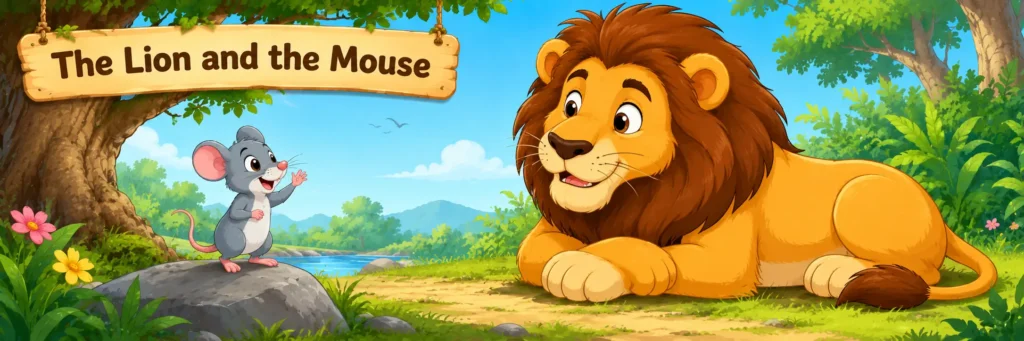
A tiny mouse accidentally woke up a sleeping lion, who caught him in his paw. The mouse begged for his life, promising to help the lion one day if he let him go. The lion laughed at the idea but let him go anyway. A few days later, hunters caught the lion in a heavy rope net. Hearing his roars, the little mouse ran over and chewed through the thick ropes, saving the king of the jungle.
- Moral: No act of kindness is ever wasted, and even the smallest friend can be of great help.
2. The Monkey And The Crocodile
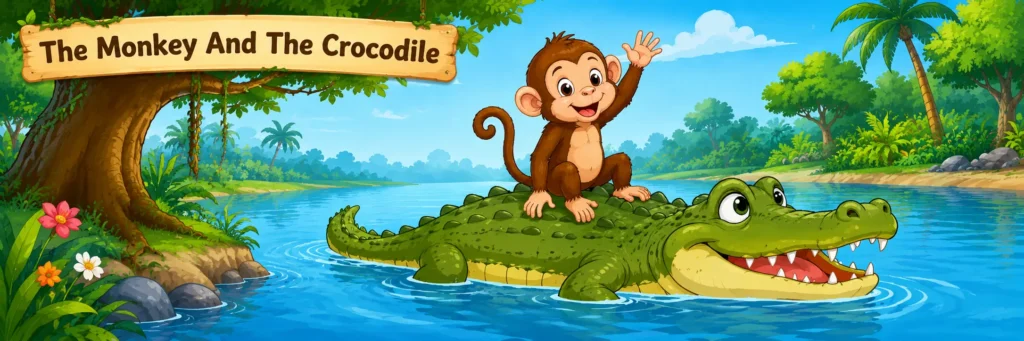
A clever monkey lived on a berry tree by a river and regularly shared sweet fruits with his friend, a crocodile. One day, the crocodile’s wife demanded to eat the monkey’s heart, so the crocodile invited the monkey to his home, carrying him across the river on his back. Halfway through the deep water, the crocodile confessed to the plan. The monkey quickly said he had left his heart back on the tree. The crocodile turned back, and the monkey safely climbed up, ending the friendship.
- Moral: Quick thinking can save you from danger, and a true friend never betrays your trust.
3. The Ant and the Grasshopper
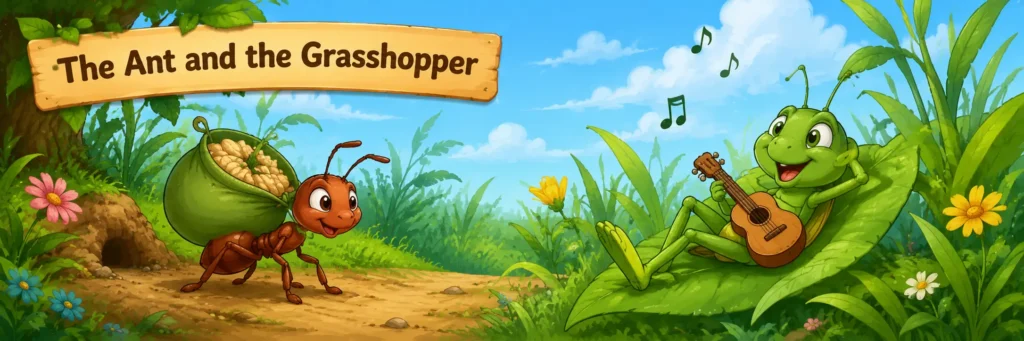
All through the warm summer months, a hard-working ant spent her days gathering food and storing it inside her nest. Meanwhile, a lazy grasshopper spent his time singing, playing music, and laughing at the busy ant. When the cold winter arrived, and snow covered the ground, the grasshopper had nothing to eat. He knocked on the ant’s door, begging for help, but the ant only had enough food for her own family.
- Moral: It is wise to prepare today for the needs of tomorrow.
4. The Thirsty Crow
On a hot summer day, a very thirsty crow flew all over the fields looking for water. He finally spotted a water pitcher on the ground, but the water level inside was too low for his beak to reach. Instead of giving up, the crow looked around, picked up small pebbles one by one, and dropped them into the pitcher. As the pebbles filled the bottom, the water rose to the top, and the crow quenched his thirst.
- Moral: Where there is a will, there is always a way to solve a tough problem.
5. The Tortoise and the Hare
A proud hare always made fun of a slow tortoise, so the tortoise challenged him to a running race. The hare ran fast and, confident of an easy victory, decided to take a short nap under a shady tree midway through. While the hare was fast asleep, the tortoise kept walking slowly, steadily, and never stopped until he crossed the finish line to win the race.
- Moral: Slow and steady progress wins the race, while overconfidence leads to failure.
Fun Ways to Teach Moral Stories to Kids in English
Using simple, interactive methods keeps these moral stories fresh in your child’s mind long after the book is closed.
- Read Stories Regularly – Make reading a regular part of your child’s day, like right before bed or after afternoon naps. A steady routine helps them look forward to storytime every day.
- Ask Simple Questions after Moral Story – Instead of just closing the book, ask your child what they would do if they were the main character. This gets them thinking about choices and outcomes.
- Use different voices for different characters – Change your voice to match a roaring lion, a tiny mouse, or a slow tortoise. Giving characters their own sound keeps young children focused and entertained.
- Use Visuals for Interaction – Point to the pictures in the book or use simple finger puppets while you speak. Visual cues help kids connect the words they hear with real actions.
- Discuss the Moral – Spend a minute chatting about the lesson at the end of the tale. Ask your child how that specific lesson fits into their own daily habits.
- Connect Moral Stories to their world – When you notice your child sharing a toy or waiting patiently, remind them of the characters from their favorite book to praise their good behavior.
Most Popular Moral Values Taught Through Stories
Classic short stories with moral lessons focus on straightforward values that help shape a child’s everyday personality.
- Courtesy – Children see how using polite words like “please” and “thank you” makes daily interactions with family and friends much happier.
- Kindness – Stories show kids that helping someone in trouble is always the right choice and makes the world a better place for everyone.
- Teamwork – Kids learn that working together with others makes a big task easy and helps everyone finish the job faster than going it alone.
- Patience – Through different animal characters, children understand that good things take time and that rushing often leads to mistakes.
- Courage – Stories teach kids that being brave doesn’t mean you aren’t scared; it means facing your fears and doing the right thing anyway.
Conclusion
Sharing everyday small short moral stories in English builds a great foundation for your child’s character and growth. If you want a supportive space to nurture these habits, finding a good Preschool in Gurgaon or a reliable Day care in Gurgaon ensures your little one gets the right early guidance and plenty of social interaction.
FAQ’s of Short Stories with Moral
At what age should parents start reading moral stories to children?
You can start around two years old. At this age, toddlers love the rhythm of your voice and the colorful pictures, which sets up a healthy reading habit for later on.
Do moral stories actually help with overall child development?
Yes, they do. They help kids sit still and listen, build up their vocabulary, teach emotional basics, and help them understand feelings in a very simple way.
How do small short moral stories in English for kids foster empathy and kindness?
When kids see a character feel sad, happy, or scared, they naturally match those feelings to themselves and learn to treat the people around them with more care.
Is it okay to repeat the same story many times?
Absolutely. Repeating books helps kids memorize words, understand the order of events better, and fully get the point of the story.
How long should a storytime session be?
For little kids, 10 to 15 minutes is usually plenty. Keeping it short and lively keeps them from getting restless or losing interest.
